
ONE SERVICE. A CLEAR NEXT STEP.
Service Pages That Help Kelowna Customers Make an Enquiry
A useful service page helps someone decide whether you can solve their problem, work in their area and explain what happens after they get in touch.
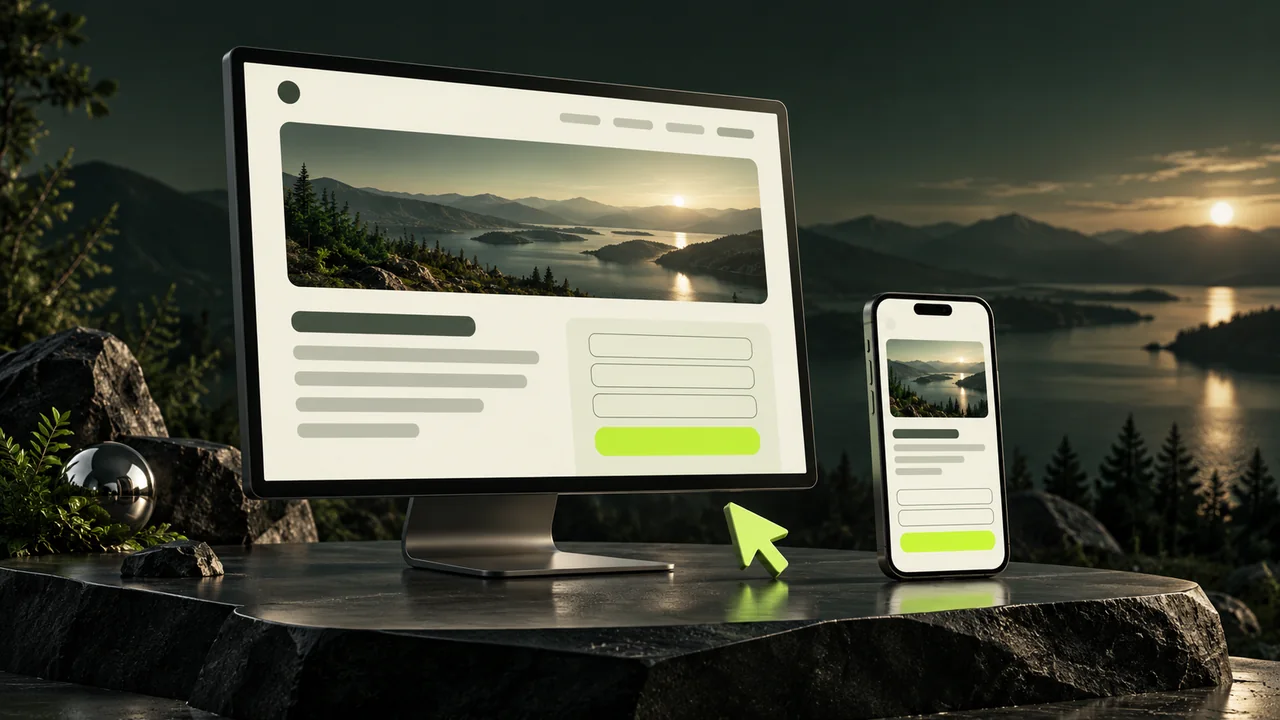
Someone lands on your website after searching for a local service. They may already know what they need, but still have practical questions: do you handle this kind of job, do you travel to their neighbourhood, and what information should they send? A Kelowna service business website should answer those questions before asking for an enquiry.
Start by improving one important service page. You can make it more useful without rebuilding every part of the site.
1. Give the page one clear job
Choose a specific service and the customer decision it supports. A general services overview can introduce your business, while a dedicated page can explain one job in enough detail for someone to assess the fit.
For a hypothetical gutter-cleaning business, the page could help homeowners understand what a cleaning visit includes and request an estimate. That is a clearer purpose than combining gutter cleaning, landscaping and renovations under a vague promise to handle everything.
Write a descriptive page title and main heading. For example, “Gutter Cleaning in Kelowna | Business Name” tells readers more than “Quality Solutions.” Google recommends concise, descriptive page titles; it may generate a different title in search results, so treat your title as a clear description rather than a guaranteed display.
2. Explain the service area and scope early
Place a short summary near the top: who the service is for, what it includes and where it is available. Name Kelowna, West Kelowna or other communities only when you actually serve them. Explain travel limits or scheduling differences when those affect the customer’s decision. Do not imply that you have a local office where you do not.
In our hypothetical example, the introduction might read: “We clear debris from residential gutters in Kelowna and West Kelowna. Send your location and a short description of the property so we can confirm access, scope and availability.” A real business should adapt that wording to its actual work and process.
Then clarify exclusions and conditions. Does the service include downspout checks? Are repairs separate? What access is needed? Useful specifics reduce uncertainty and help unsuitable enquiries identify themselves early.
3. Use a simple service-page outline
This structure gives each section a customer question to answer:
- Service and area: what you do, who it helps and where you work.
- What is included: the actual scope, relevant options and exclusions.
- How it works: enquiry, assessment, estimate, scheduling and completion.
- Evidence: real work examples, attributed feedback and verifiable credentials where applicable.
- Practical questions: preparation, access, pricing approach and availability.
- Next step: the information needed to start a useful conversation.
If every job requires an assessment, say how estimates are prepared instead of inventing a starting price. Only publish a response-time promise when your team can reliably honour it.
4. Show evidence that belongs to your business
Use original project photographs with permission, a short description of the problem addressed, and a factual account of the work. A photo becomes more useful when its caption explains what the reader is seeing. Remove personal details and avoid revealing a customer’s address.
A testimonial should reflect genuine feedback, with appropriate permission and attribution. Stock or AI imagery can illustrate an idea, but should not appear to document a completed customer job. Google’s people-first content guidance encourages original value and information that helps readers accomplish their goal. For a service page, your own process and accurate examples can provide that value.
5. Make the enquiry work on a phone
Read the page on a phone without zooming. Check that headings are easy to scan, photographs fit, buttons are usable and no floating panel covers important information. Open the page from a social profile too: that may be the route a customer takes.
Ask for information you need to assess the enquiry. That might be a name, preferred contact method, community and brief description of the job. Make optional fields clear. Visible labels help explain each field; web.dev’s form accessibility guidance also recommends testing forms across different platforms.
Submit a test enquiry and confirm that it arrives where someone will see it. Check error messages and the success confirmation. Explain what happens next, and provide a clear alternative contact route if that suits your business. A form that looks polished but loses messages cannot support the page’s purpose.
6. Connect the page and measure useful outcomes
Link to the service page from your services overview and relevant articles. Use descriptive wording that identifies the destination, following Google’s internal linking guidance. Give visitors a related guide when it answers a preparation question, while keeping the main enquiry route easy to find.
Review visits, successfully received enquiries and whether those enquiries fit your service and area. With suitable analytics configured, compare page activity with your enquiry records; a button click alone is not a completed lead. Small numbers and seasonal changes can make comparisons uncertain, so record what changed before drawing conclusions.
For the surrounding search foundations, use our Kelowna local SEO checklist or explore our local SEO approach.
Questions before you publish
Do I need a page for every nearby city?
Start with accurate coverage on a useful service page. Create another location page only when it has meaningful information for that audience. Swapping city names into otherwise identical pages rarely helps a customer decide; Google’s doorway abuse policy addresses pages created for similar searches that funnel visitors elsewhere.
Should I redesign the whole website first?
Review one page’s accuracy, mobile experience and enquiry path first. That gives you a concrete improvement brief. If the same problems affect the wider site, our Kelowna web design service is a useful place to explore the next step.
Before publishing, confirm five things: the scope is accurate, the service area is real, the evidence is authentic, every link works and a test enquiry reaches your team. Want another set of eyes? Request your free three-point marketing plan.
Sources and further reading
Platform guidance checked on 26 October 2026.